TOOLS
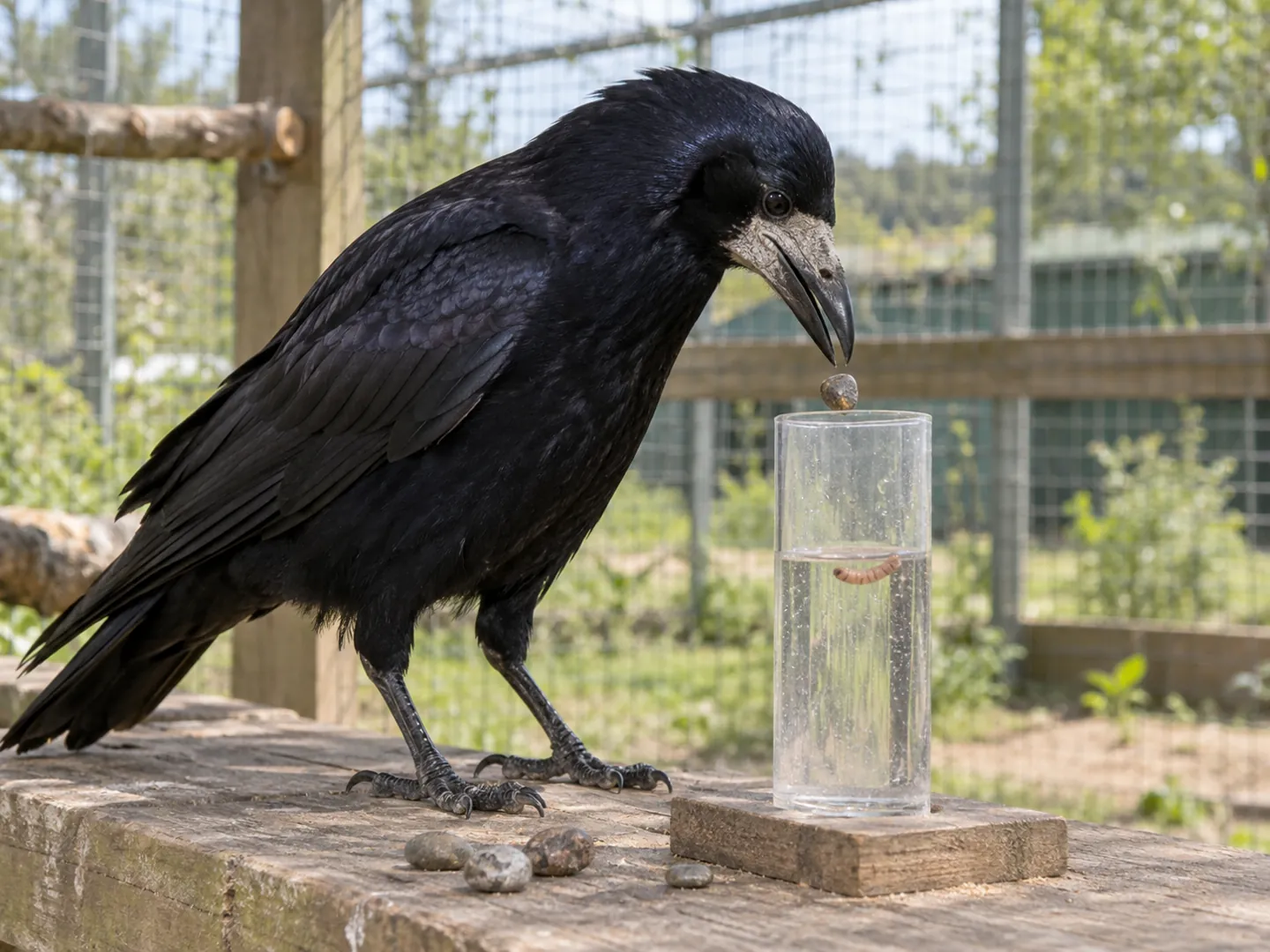
Stones in the pitcher
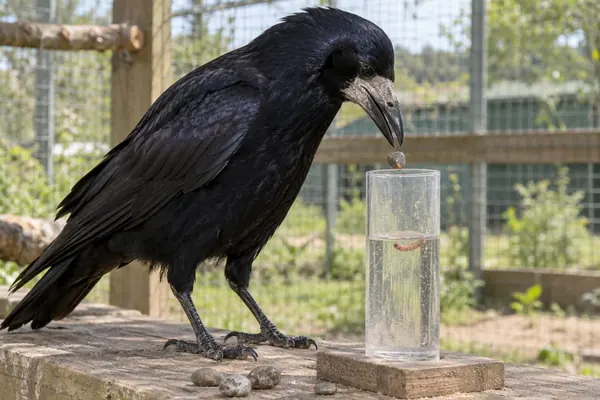
In Aesop's fable a crow drops stones into a pitcher. At Cambridge, four rooks did the same to reach a floating worm, and soon picked larger stones over small ones.
Compare the skills doodlegenius
A PLAIN-ENGLISH GUIDE TO CORVIDS
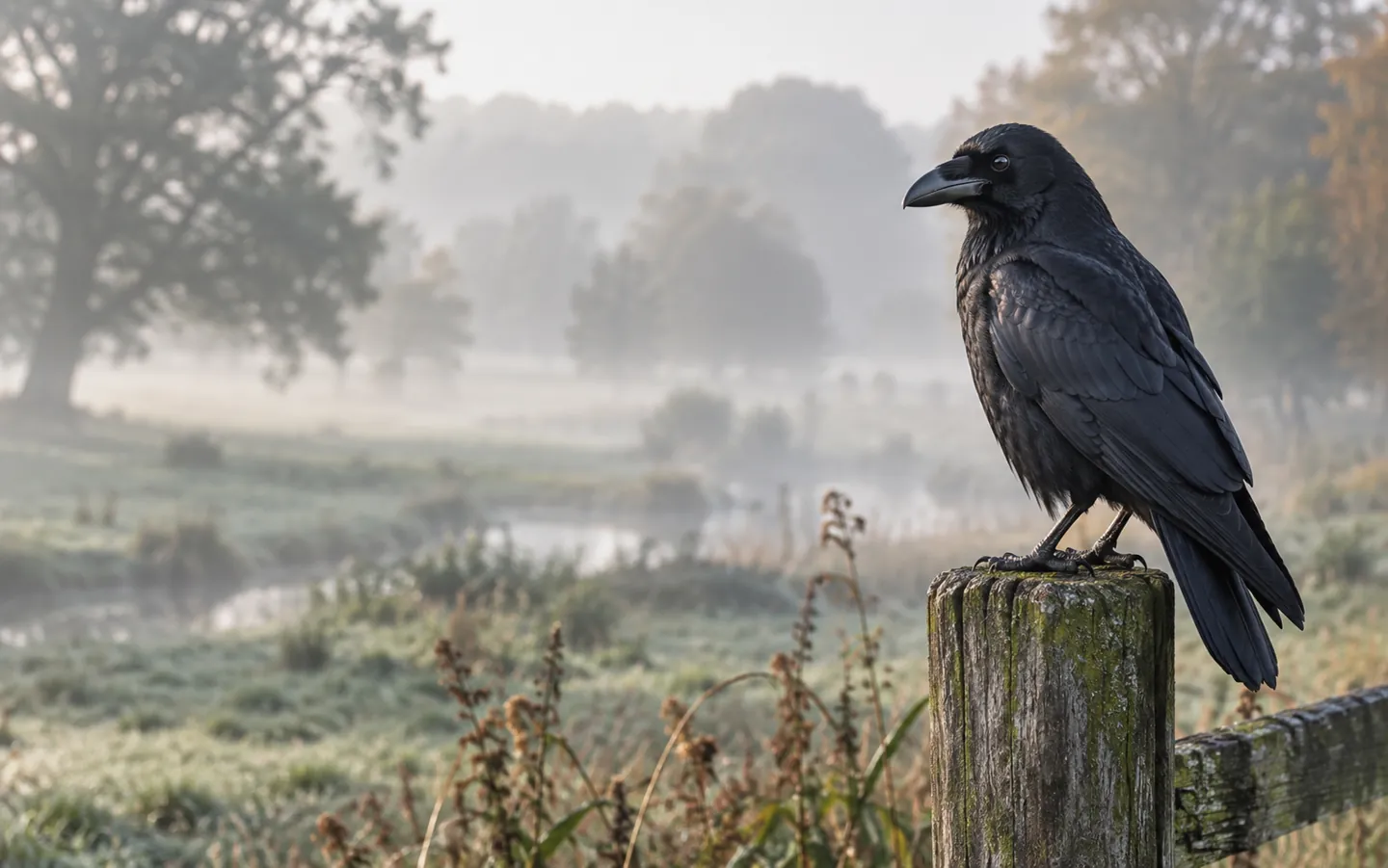
Rooks, magpies, jays and ravens are all members of the crow family.
Researchers call them corvids, and the experiments are striking: rooks used stones to raise water to reach a worm, magpies noticed a mark seen only in a mirror, and wild crows remembered a masked face for years.
CORVID the crow family
See what they can doTHE SHORT ANSWER
Three experiments,
three different kinds of clever.
TOOLS
In Aesop's fable a crow drops stones into a pitcher. At Cambridge, four rooks did the same to reach a floating worm, and soon picked larger stones over small ones.
Compare the skillsMIRRORS
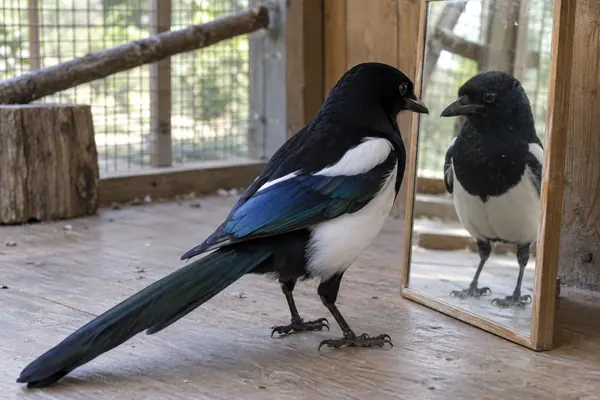
Magpies given a coloured mark they could see only in a mirror tried to reach it. Two of five birds showed clear evidence: the first non-mammal to pass this test.
See the evidenceFACES
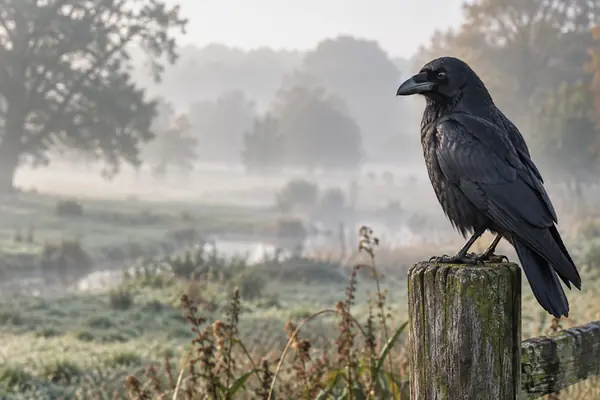
Wild crows near Seattle scolded a mask worn by the people who trapped them, and birds that were never caught learned to scold it too.
Why it matters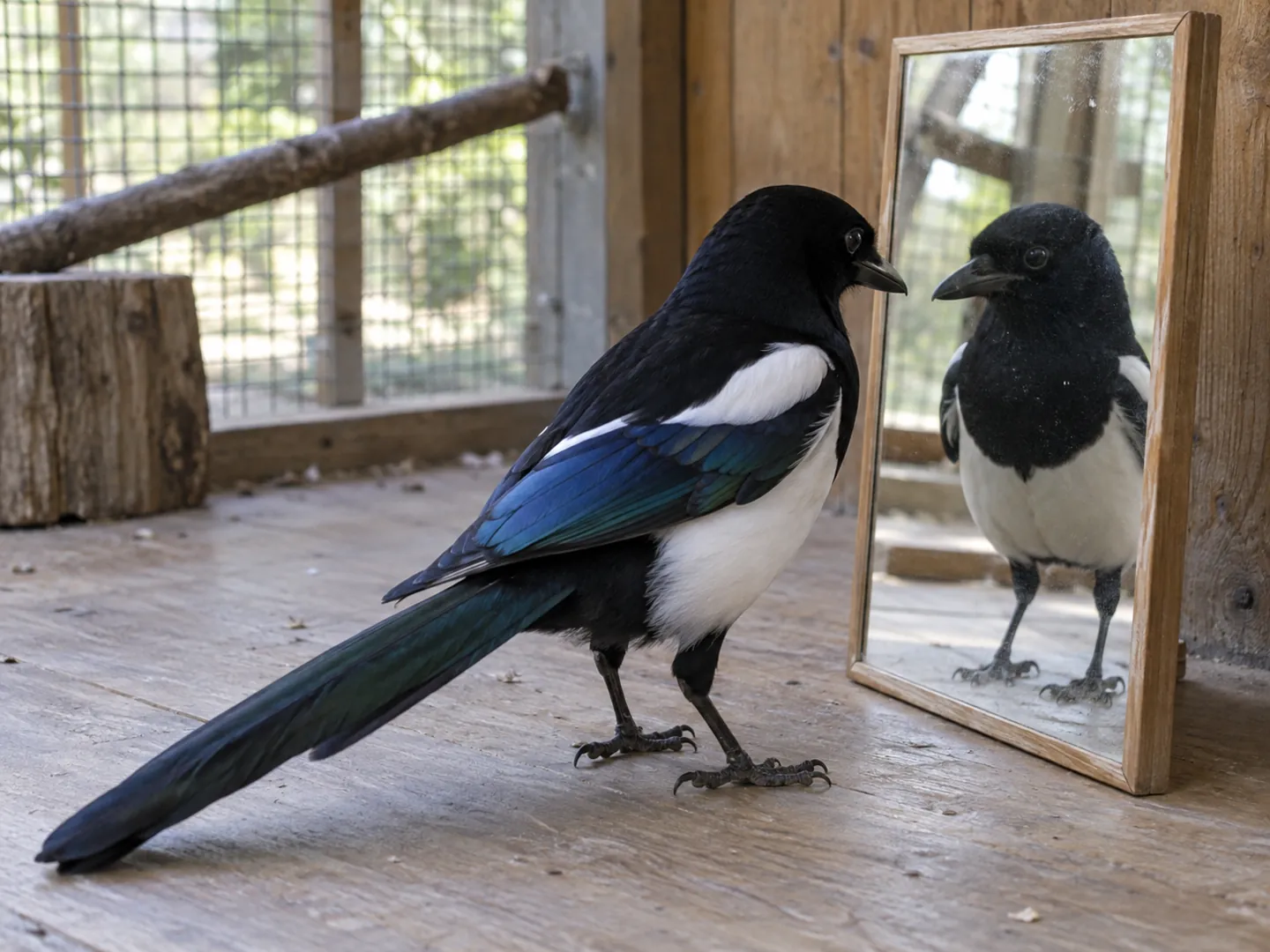
WATCH CORVIDS YOURSELF
You do not need a lab to see corvids at work. These tips come from the RSPB and the research above.
The RSPB says jays bury acorns in autumn to retrieve them later in winter, and are easier to see then as they fly out in search of oak trees.
Jays are shy woodland birds. A screaming call often gives one away, with a flash of white on the rump as it flies.
Magpies and scrub jays have been shown to remember which other birds watched them while they were storing food.
Crows learn faces linked to bad experiences and pass that on to others. Watch from a distance and leave nests alone.
TWO NUMBERS WORTH KNOWING
One figure for distance,
one for memory.
1.2 km
How far scolding of the mask spread
At one Seattle site, learning let scolding of the 'dangerous' mask double in frequency and spread at least 1.2 km from where the trapping happened, over a five-year period.
WILD CROWS · PROC. R. SOC. B, 2011
4 years
How long some ravens told the masks apart
After just four training trials, some ravens still distinguished the dangerous mask from a neutral one for the next four years, with no further pairing with a dead raven.
CAPTIVE RAVENS · UNIVERSITY OF VIENNA
The raven paper also cites earlier work in which wild American crows alarm-called at a mask up to 2.7 years after being caught by someone wearing it.
LAB OR WILD?
Pick a skill. The value says who showed it. The bar shows how close the evidence comes to wild birds' everyday lives: low for tests on a handful of captive birds, high for behaviour seen in the wild.
Studies from the University of Cambridge, PLOS Biology, the University of St Andrews, the University of Washington and the University of Vienna.
WHY IT MATTERS
Birds and mammals last shared an ancestor about 300 million years ago, and birds lack the layered neocortex of mammals. Yet corvids stand out for their brain size relative to body size, and the magpie study shows a neocortex is not needed for mirror self-recognition.
New Caledonian crows show how far this goes. Their hooked tools work better when the hook is deeper. For comparison, our ancestors made stone tools over 3 million years ago, but the oldest known fish hooks are just 23,000 years old.
Questions
By several measures, yes. The lead author of the Cambridge rook study said corvids 'in many ways rival the great apes in their physical intelligence and ability to solve problems'. The only other animal known to complete the same stone-and-water task was the orang-utan.
In a 2008 study, magpies given a coloured mark visible only in a mirror tried to reach it, and stopped once it was gone. Two of five birds showed clear evidence. The authors say this shows a key step in self-recognition, not human-style self-awareness.
Yes. Wild American crows alarm-called at a mask up to 2.7 years after being caught by someone wearing it, and crows that were never caught learned to scold it from others. Captive ravens in Austria told masks apart for four years.
They are not believed to. The Cambridge researchers say rooks do not use tools in the wild because they do not need to: they have other food they can get without tools.
The RSPB says jays are famous for their acorn feeding habits and bury acorns in autumn so they can retrieve them later in the winter.
Updated
ABOUT THIS NAME
doodlegenius.com is part of the DoodleSale portfolio. It isn't in an auction right now, but you can ask about leasing it.